
Learning and development trends for 2027 include AI skills for every employee, skills data driving decisions, protecting people’s thinking skills, managers becoming the main channel for learning, reskilling from within and proving impact.
Every year I’m asked what L&D teams should focus on next. This year my answer is mostly about priorities. The tools are moving fast, and I’ve covered those in a separate post on online learning trends for 2027. This one is about the bigger decisions: what to invest in, who to develop and how to show it’s working.
Key Points:
- Basic AI capability is becoming something every employee needs
- Skills data is starting to shape what L&D builds and buys
- Critical thinking needs protecting as more work is done with AI
- Line managers have more influence over learning than any programme
- More organisations are retraining their own people before hiring
- Proving impact is no longer optional
1. AI Skills Become Everyone’s Job
Most roles will use AI in some way in 2027, from drafting emails to analysing data. That makes basic AI capability something every employee needs, along with the judgement to check what it produces.
Most organisations I speak to have bought the tools well ahead of building the skills to use them. It’s usually L&D that gets asked to close that gap.
Measuring AI readiness
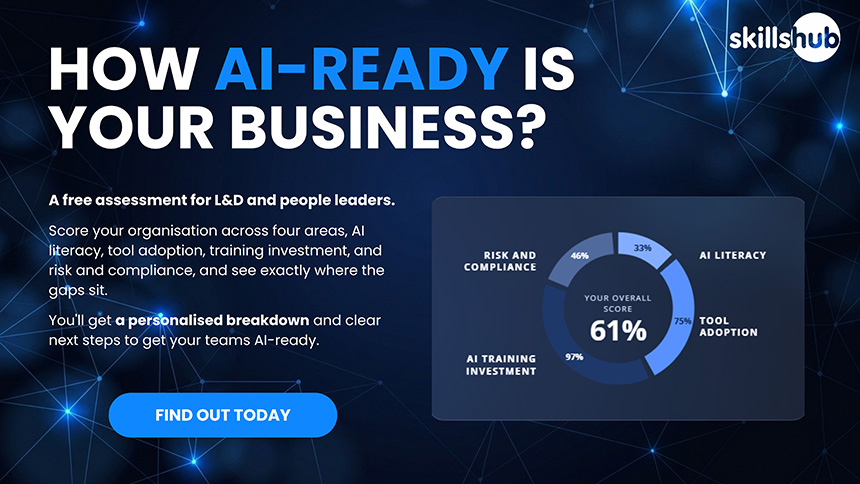
Start by finding out where people stand. Our AI readiness checklist is a quick way to spot the gaps. Our AI Readiness Assessment goes further, scoring each area so you know exactly where to focus.
2. Skills Data Starts Driving Decisions
The World Economic Forum expects 39% of workers’ core skills to change by 2030. If it were a workforce of 100 people, 59 of them would need some form of training. That’s a lot of change to plan for, and you can’t plan for it without knowing what skills you’ve got today.
More organisations are starting to map skills properly, and that data is shaping what gets built and bought. We saw the early signs of this in our look at trends in professional development. I think 2027 is the year it becomes standard practice for any L&D team that wants a seat at the table.
Mapping skills
Start small. Map the skills for a handful of critical roles, compare them with what people have and use the gaps to shape next year’s plan. Then build what you find into your learning and development strategy so it guides every decision that follows.
3. Protecting People’s Thinking Skills
This is the trend I think gets talked about least. In the TalentLMS research, 36% of employees said generative AI tools were weakening their ability to solve problems on their own. Almost the same number said the tools were helping them learn new skills.
I can believe both. AI can be a brilliant learning partner, but it will happily do the thinking for people if you let it. I think L&D teams will need to be much more deliberate about building judgement, critical thinking and problem solving, the skills that make someone good at using AI in the first place.
Building critical thinking in
Build thinking into your programmes on purpose. Ask people to evaluate and challenge AI output, explain their reasoning and work through a problem before reaching for a tool. There’s good grounding for this in cognitive learning theory, which puts active thinking at the centre of how people learn.

4. Managers Become the Main Channel for Learning
The person with the most influence over whether learning sticks is usually the line manager. Managers decide whether people get time to learn, whether they get to practise new skills and whether anyone notices when they improve.
In 2027 I think more L&D teams will design programmes around managers from the start, giving them what they need to coach, set learning goals and follow up.
Bringing managers in
Give managers a short guide for each programme: what their people are learning, what to look for and what to ask in their next one-to-one. The 70/20/10 model is a good reminder of how much learning happens outside the course itself.
5. Reskilling From Within
Hiring for new skills is slow and expensive, and many of the skills organisations need are hard to find. More businesses are looking inside first, retraining people whose roles are shrinking for roles that are growing.
Internal candidates also bring knowledge of how the business works, which can take a new hire months to build. When it works, you keep good people and fill gaps faster than you could by hiring.
Planning internal moves
Identify the roles most likely to change, talk to people early and build clear routes into the roles you’ll need. Our guide to upskilling vs reskilling explains how to tell which one each group needs.
6. Proving Impact Becomes Non-Negotiable
With budgets under pressure, every L&D team I speak to is being asked the same question. What did we get for the money?
Completion rates won’t cut it any more. Boards want to know whether behaviour changed, whether performance improved and whether people stayed. Retention is the easiest of those to make a case for. TalentLMS found 73% of employees say better learning opportunities would make them stay longer.
Deciding what to measure
Agree what you’re going to measure before you launch anything, and focus on behaviour and performance over completions. Our guide to learning and development KPIs is a good list to start from.
What This Means for Your 2027 L&D Plan
If I had to sum it up, I’d say start with the skills your business needs and work backwards. Find out where people stand, focus on a few priorities, bring managers in early and decide how you’ll prove it worked before you start.
Plan Your 2027 L&D with Skillshub
Our online learning platform brings learning, skills tracking and reporting into one place, and our course library includes practical AI courses alongside leadership, compliance and soft skills content. If you’d like to see how it could work for your organisation, book a free demo.