

Every company says they want a culture of learning. Yet most eLearning sits untouched on a dashboard, collecting digital dust.
People log in once, browse a few modules, and never come back. The business proudly reports thousands of “available courses,” but can’t name a single measurable improvement that came from them.
If you’re currently comparing tools or looking for alternatives, we’ve reviewed the best eLearning platforms in the UK to help you see how they stack up in practice.
The truth is simple: most eLearning doesn’t fail because of bad content or poor technology. It fails because it’s disconnected from how people learn, work, and change.
I’ve spent over two decades helping organisations design digital learning that sticks, and I’ve seen the same pattern again and again. Companies buy expensive platforms, fill them with courses, and expect results. But learning isn’t about uploading content. It’s about creating behaviour change and that takes more than access.
The uncomfortable truth: completion isn’t impact
Let’s be honest, completion rates mean very little. A learner clicking “finish” tells you nothing about what they’ve learned, let alone what they’ve applied.
Yet many L&D teams are still chasing usage metrics as if they prove success. It’s understandable, they’re easy to track and look good in reports. But the question leaders really want answered is, “What’s changed because of this?”
Real success in eLearning isn’t measured in clicks. It’s measured in conversations that happen differently, decisions that are made faster, and performance that improves.
At our company, we stopped tracking completion as a core measure years ago. Instead, we look at usage patterns, reflection data, and on-the-job actions. When learning drives a shift in behaviour, that’s when we call it a result.
Why traditional eLearning doesn’t work
There’s no shortage of digital learning platforms. The problem isn’t supply; it’s structure.
Most eLearning was built for convenience, not change. It’s designed to deliver information, not transformation.
Here are the main reasons most eLearning fails to deliver:
1. It’s too long
Attention spans are short. People don’t want an hour-long course, they want a five-minute fix that helps them right now. When training feels like a chore, engagement collapses. Bite-sized content works because it fits around real work, not instead of it.
2. It’s too theoretical
Most courses explain what good looks like but don’t show how to do it. Learners understand the concept but can’t connect it to their daily challenges. Real learning happens when people can instantly apply what they’ve just learned.
3. There’s no follow-up
A one-off video or module might spark interest, but without reinforcement, people forget. If the business doesn’t revisit, discuss, or track the learning, it fades fast.
4. It’s not relevant enough
People won’t engage with content that doesn’t feel personal. Generic compliance videos or one-size-fits-all management modules don’t land. Tailored, contextual learning is what changes behaviour.
5. It’s disconnected from performance
Too often, eLearning is treated as a “learning activity,” separate from work. But learning only has value when it improves performance. When the platform and the business don’t speak the same language, impact disappears.
What great eLearning looks like
The difference between poor digital learning and great digital learning isn’t production quality or course length. It’s design intent.
Great eLearning starts with the question, “What do we want people to do differently?” Then, it designs backwards from that outcome.
At our company, every learning module, pathway, and tool is built to drive a real-world change. Whether it’s coaching better, managing time smarter, or closing a sale, the learning always ends with application.
Here’s what that looks like in practice:
1. Practical, short, focused learning
Each module targets a single skill or behaviour. The goal isn’t to overwhelm with information but to equip learners with one actionable takeaway they can use the same day.
2. Integrated reflection and action prompts
After completing a module, learners answer short reflection questions or set a personal action goal. This simple step turns passive learning into active application.
3. Manager involvement
Managers receive discussion guides linked to the same content. This encourages coaching conversations that keep learning alive and relevant.
4. Data that shows behaviour change
Our platform tracks not only what people watch but what they do next. This gives L&D teams a clear link between learning engagement and performance improvement.
When you combine these principles, you move from “people liked the course” to “people are leading better.”
What people want from digital learning
Most employees don’t hate learning. They hate irrelevant, boring, or overly complicated learning. When done right, digital training becomes a natural part of how people grow.
Research and experience tell us learners want three things above all else:
1. Speed and simplicity
They want learning that fits into their day, not learning that takes over it. That means short modules, instant access, and no complex logins.
2. Relevance and choice
They want to feel that the learning is for them. That’s why personalisation matters. Give people options and let them explore what’s most useful in their role.
3. Proof of progress
People are motivated by progress. Showing how their skills have developed over time gives learning a sense of purpose.
When you design with these expectations in mind, usage stops being a problem. People come back to the platform because it helps them do their job better not because HR asked them to.
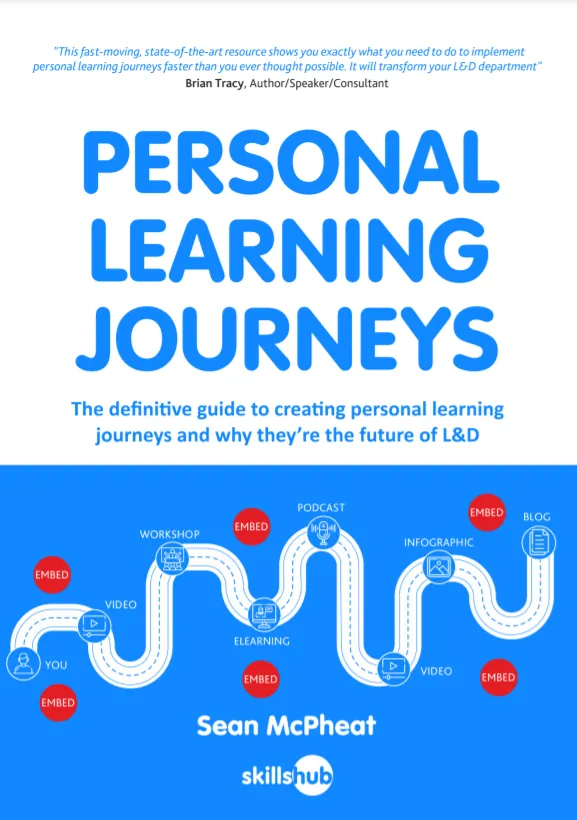
Learn How To Create Personal Learning Journeys For FREE!
The business cost of getting eLearning wrong
I’ve seen companies spend six figures on a learning platform only to have engagement flatline after the first month. The system looks impressive, but adoption is minimal, and nobody can explain what impact it’s had.
That’s not just frustrating; it’s costly. Every pound spent on content that doesn’t transfer to performance is wasted budget. Every missed opportunity to improve capability leaves managers and teams stuck in the same patterns.
In some cases, poorly designed eLearning even damages credibility. When people experience boring or irrelevant digital training, they associate all learning with “wasting time.” That makes it harder for future initiatives to land.
A modern learning strategy must be built around outcomes, not just activity. The days of “more courses, more engagement” are over. The focus now needs to be on better performance, fewer excuses.
For a practical guide on choosing the right partner — and avoiding costly mistakes, check out this article on how to choose the right eLearning provide.
The shift from learning delivery to performance enablement
Forward-thinking organisations are moving from “learning management” to “performance enablement.” That’s not semantics, it’s a fundamental mindset shift.
Instead of measuring how much content people consume, they measure how their behaviour changes. Instead of focusing on course completion, they focus on capability growth.
At our company, we’ve built our approach around that shift. We don’t just deliver courses; we create learning ecosystems that improve performance. That includes microlearning, reinforcement tools, reflection prompts, and manager dashboards, all designed to keep learning alive beyond the initial click.
This approach means:
- Learning fits seamlessly into work, not around it.
- Managers have visibility and ownership of development.
- Employees feel supported, not instructed.
- L&D teams can finally prove measurable ROI.
When digital learning aligns with performance, everyone wins.
How to fix broken eLearning
If you already have a platform that isn’t delivering, you don’t necessarily need to start again. Most of the time, the system itself isn’t the problem, it’s what’s been put into it.
The quickest wins usually come from redesigning the learning journey, not replacing the platform.
Here’s how to turn an underperforming eLearning system into a tool that drives real change.
1. Strip back the noise
Many platforms are overloaded. They’re stuffed with hundreds of modules, duplicated content, and outdated resources. Learners log in, feel overwhelmed, and leave.
Start by cutting the clutter. Keep only what aligns directly with your business goals. Quality always beats quantity. When the content library is clear, relevant, and concise, engagement climbs naturally.
2. Make learning shorter and sharper
Attention is your biggest battle. Instead of hour-long courses, break everything into small, specific sessions focused on one skill or behaviour at a time.
For example, instead of a 60-minute “leadership skills” course, try four 10-minute modules:
- How to give feedback in the moment
- How to coach someone through a mistake
- How to hold a tough conversation
- How to recognise effort in the right way
People can dip in and out, apply what they’ve learned immediately, and come back when they’re ready for more.
3. Build in reflection and reinforcement
Most learning fades within a week unless it’s revisited. The answer isn’t repeating the same course, it’s reinforcing it in different ways.
That could be:
- Short reflection questions after each module
- A “next step” action suggestion learners commit to
- Manager check-ins or coaching conversations
- Simple email nudges that remind people to apply what they learned
Reflection bridges the gap between learning and doing. Reinforcement keeps it alive long enough to form a habit.
4. Involve managers from the start
Manager support is the single biggest driver of whether training sticks. If line managers aren’t discussing learning, asking about progress, or holding people accountable, results will plateau.
Give managers visibility of what their teams are learning and the tools to support it. That could be as simple as conversation guides or short summaries they can use in one-to-ones.
When managers talk about learning, it signals that development matters. When they ignore it, everyone else will too.
5. Track what matters
Don’t get distracted by vanity metrics. Instead of counting logins, track behavioural outcomes:
- How many people have applied the learning?
- What changes have we seen in performance?
- How have key business metrics shifted?
Modern platforms can collect reflection data, self-assessments, and manager feedback. Combine these with operational results like sales numbers, retention, customer satisfaction — to show tangible ROI.
When learning activity links directly to business improvement, you no longer need to justify the investment. The results speak for themselves.
A simple model for lasting behaviour change
In our experience, behaviour change in digital learning follows a simple three-part model:
1. Learn it
Deliver short, focused content that answers a real need. No fluff, no jargon, just practical knowledge people can use.
2. Apply it
Ask learners to take one small action in the next few days. Make it specific and observable, something they can actually do at work.
For example:
- “Hold a feedback conversation using this structure.”
- “Plan your next one-to-one using this template.”
- “Ask three open coaching questions in your next meeting.”
The key is immediacy. Application must happen while the learning is still fresh.
3. Reflect on it
Within a week, prompt the learner (or their manager) to review what happened. What worked? What didn’t? What will they do differently next time?
This final step deepens learning and embeds the behaviour. Reflection converts experience into progress.
That’s the rhythm of effective eLearning, short input, quick action, structured reflection. It’s simple, repeatable, and measurable.
Our company builds that rhythm into everything we deliver. Every course ends with an action, every action is followed by a reflection, and every reflection feeds into data that shows real progress.
What successful eLearning cultures do differently
Companies that see long-term impact from digital learning all have one thing in common: they make learning part of daily work, not a separate event.
Here’s what they consistently do well:
1. They align learning with strategy.
Every piece of training links back to a business goal, not “we need a new course,” but “we need to improve how managers delegate.”
2. They communicate clearly.
Learners understand why the learning exists and what’s in it for them. Communication isn’t an email; it’s an ongoing conversation.
3. They celebrate application, not attendance.
Recognition goes to those who’ve made a change, not just those who’ve completed a course.
4. They measure what matters.
They focus on outcomes like improved performance, reduced turnover and faster onboarding rather than how many hours people spent learning.
5. They keep learning social.
They create opportunities to discuss learning in team meetings, coaching sessions, and peer groups. Social learning drives accountability and momentum.
These are the habits that separate high-performing learning cultures from the rest.
The role of technology in learning that lasts
Technology should make learning easier, not more complicated. A good platform acts as an enabler, it connects people, provides structure, and makes the right learning available at the right time.
But technology on its own doesn’t change behaviour. What matters is how you use it.
At our company, we design every feature around real-world application. From interactive microlearning and reflection prompts to manager dashboards and performance tracking, everything is built to turn learning into results.
Our philosophy is simple: digital learning should drive performance improvement, not just engagement.
That’s why we measure success not in views or completions, but in outcomes. We’ve seen this approach transform how organisations view L&D, from a cost centre to a measurable driver of business growth.
Your next step
If your eLearning isn’t delivering the impact you expected, you’re not alone. Most organisations reach a point where they realise content access isn’t enough, they need structure, reinforcement, and accountability.
Start by asking these three questions:
- What do we want people to do differently?
- How will we support them to do it?
- How will we know it’s happening?
Answer those, and your learning strategy will already be ahead of most.
If you’re ready to see what modern digital learning looks like, explore our eLearning platform designed to help people learn, apply, and improve at speed.